WTF?

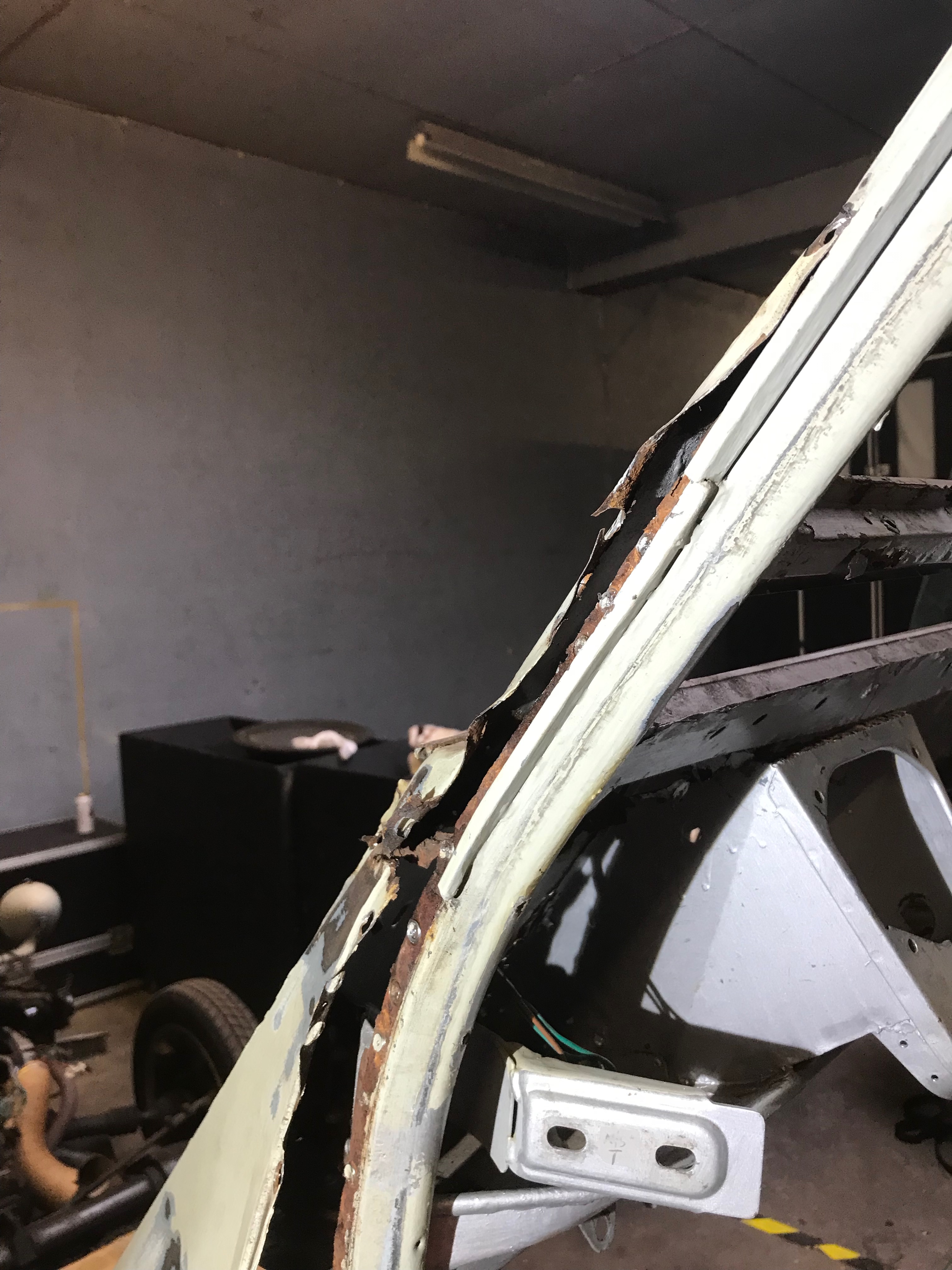
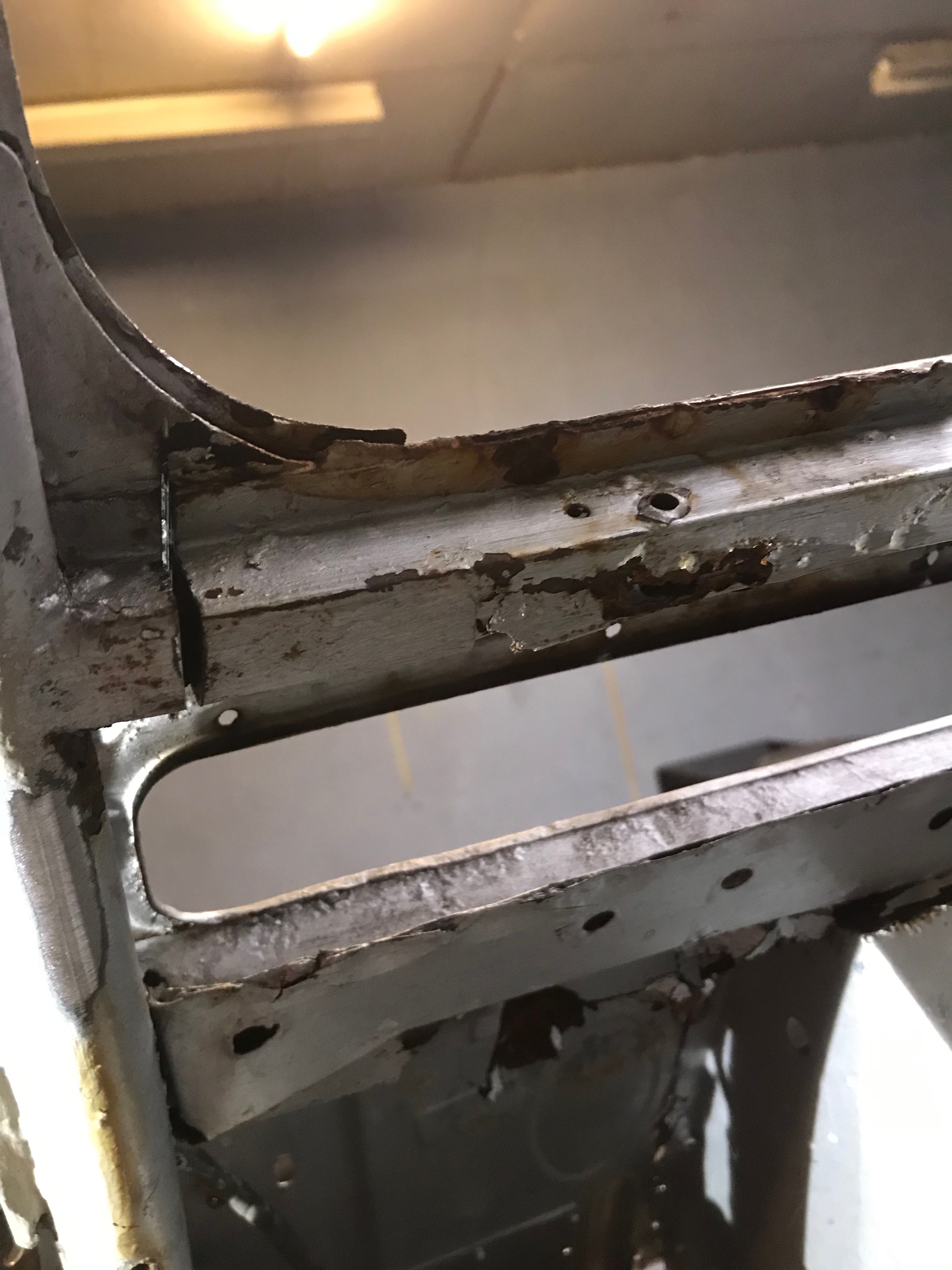
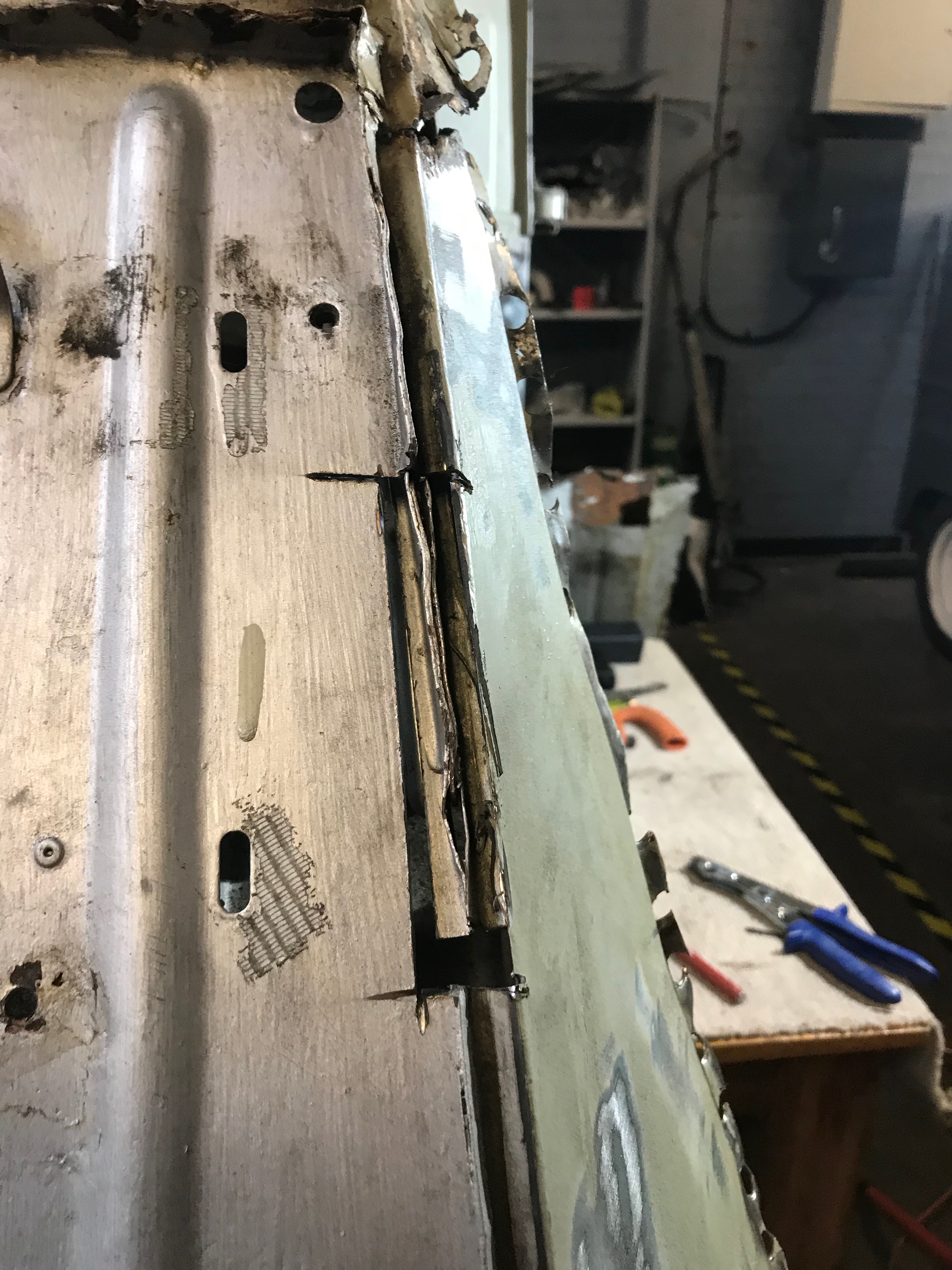
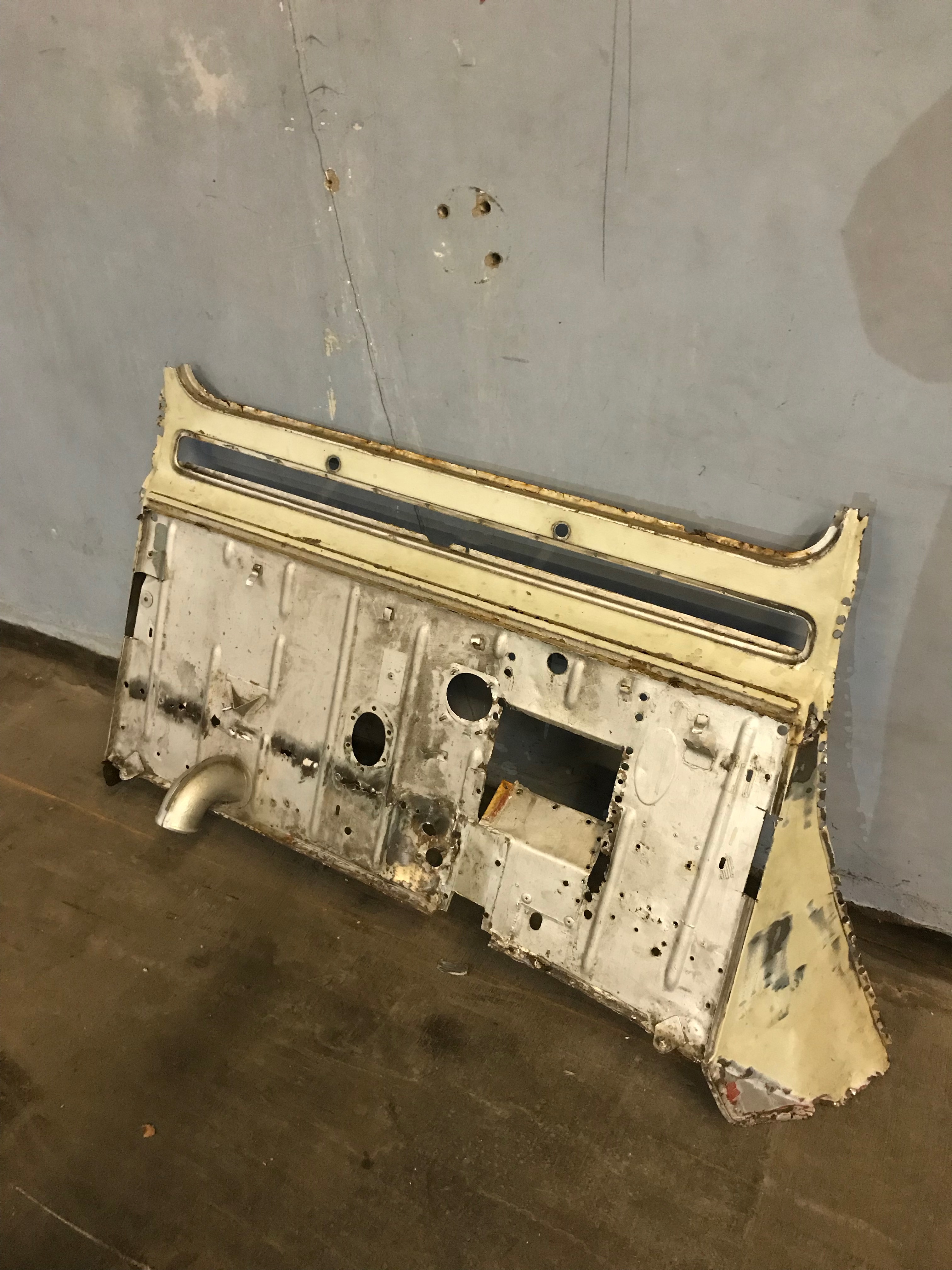
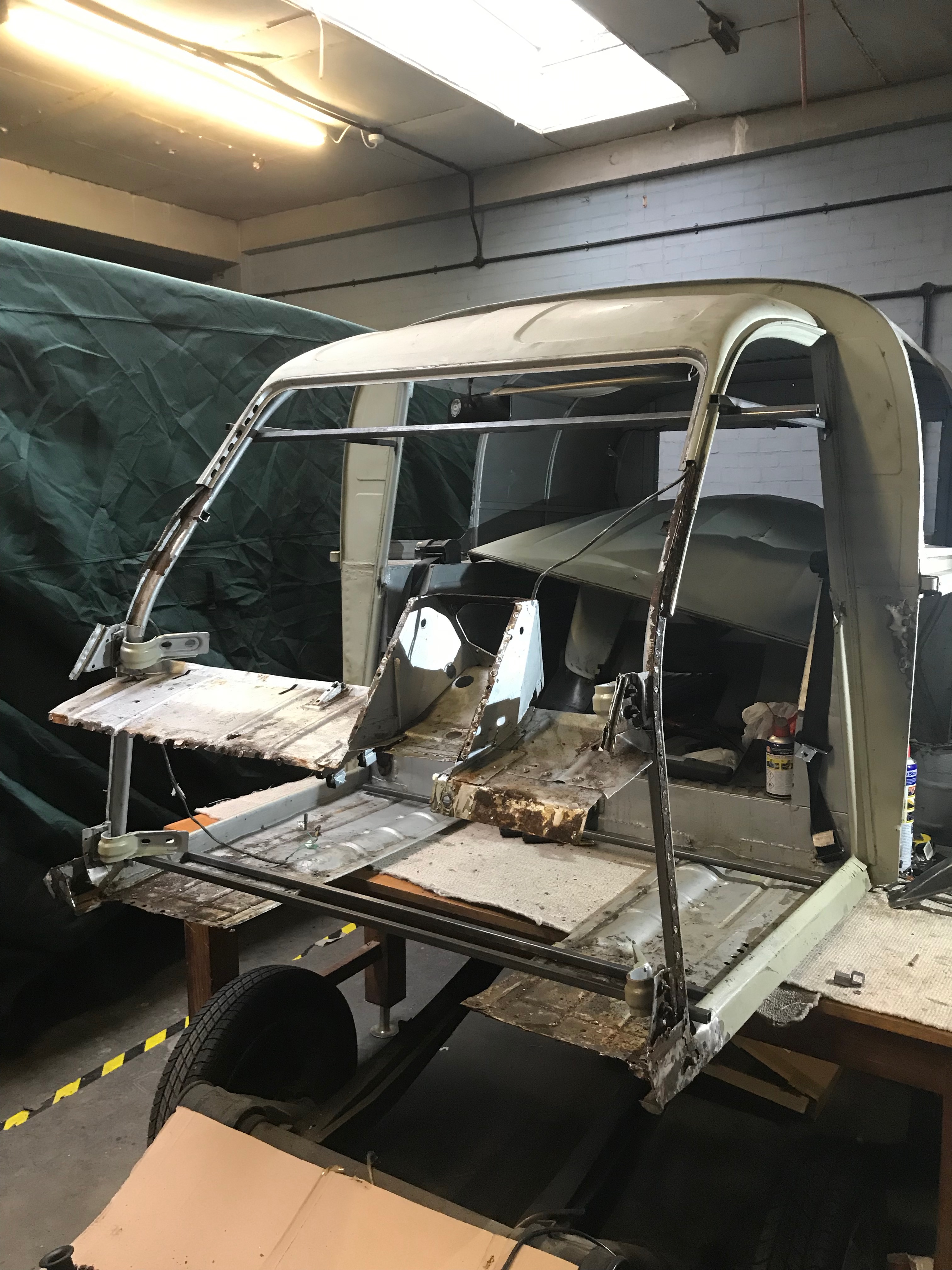
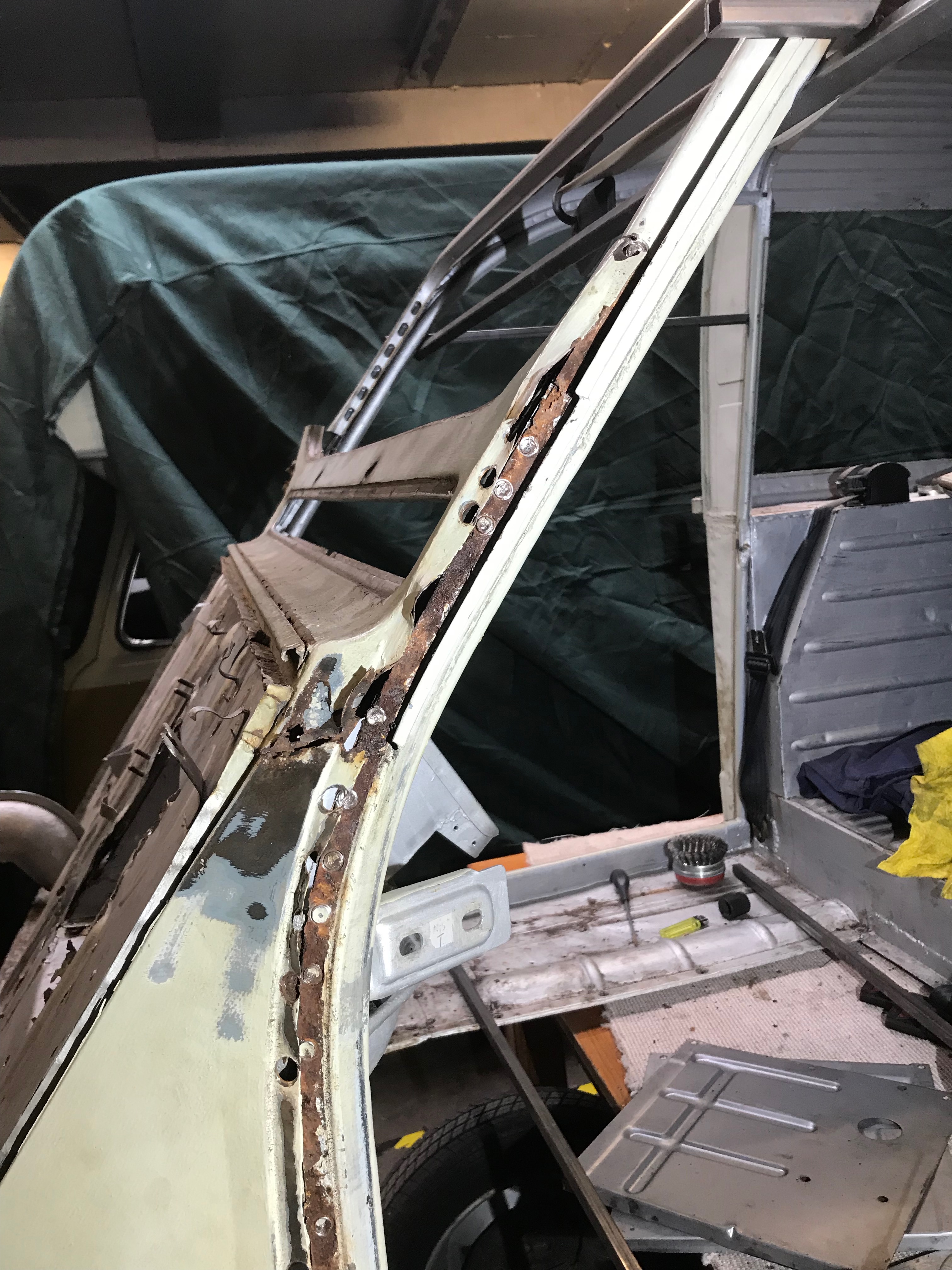
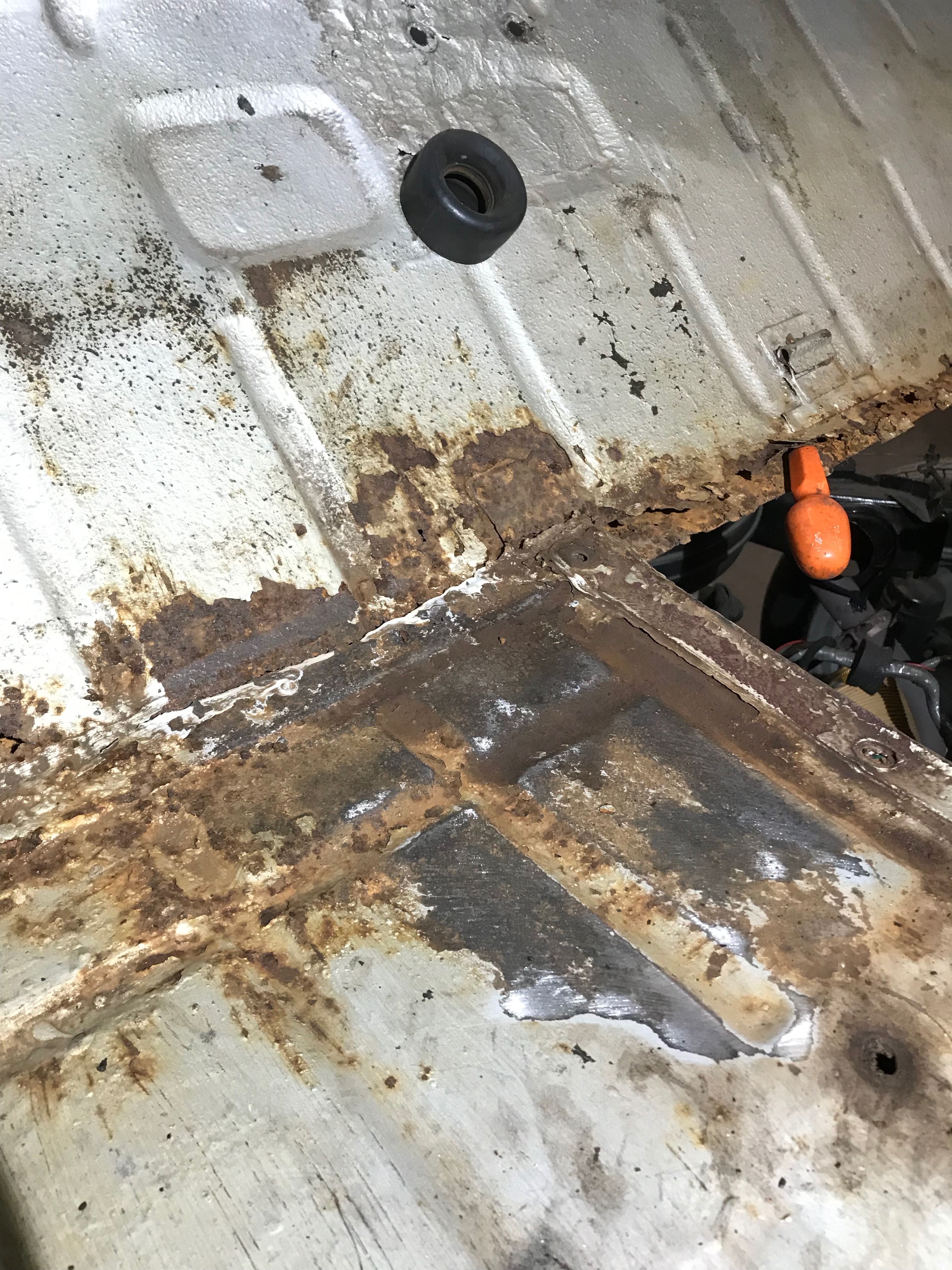
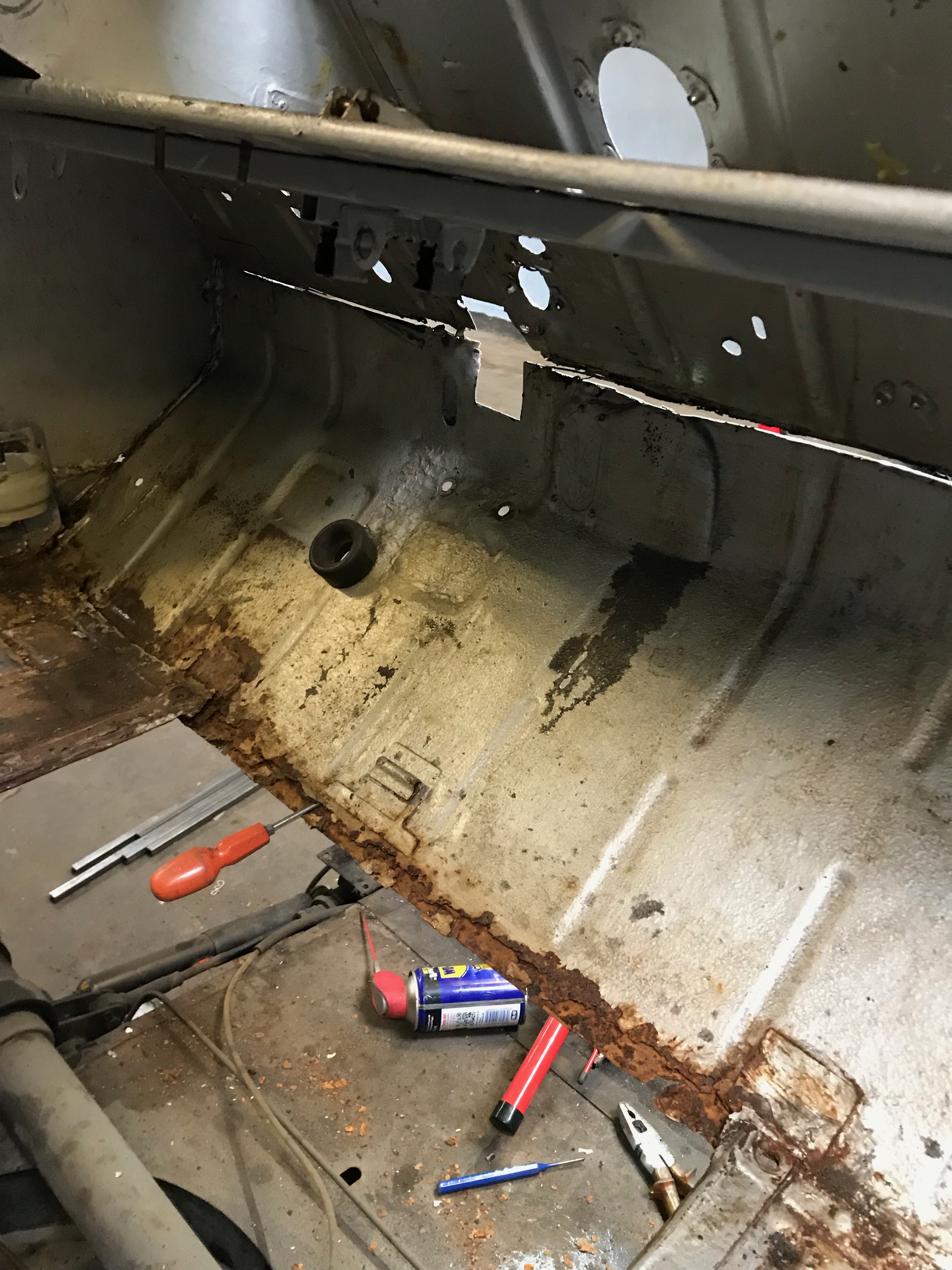
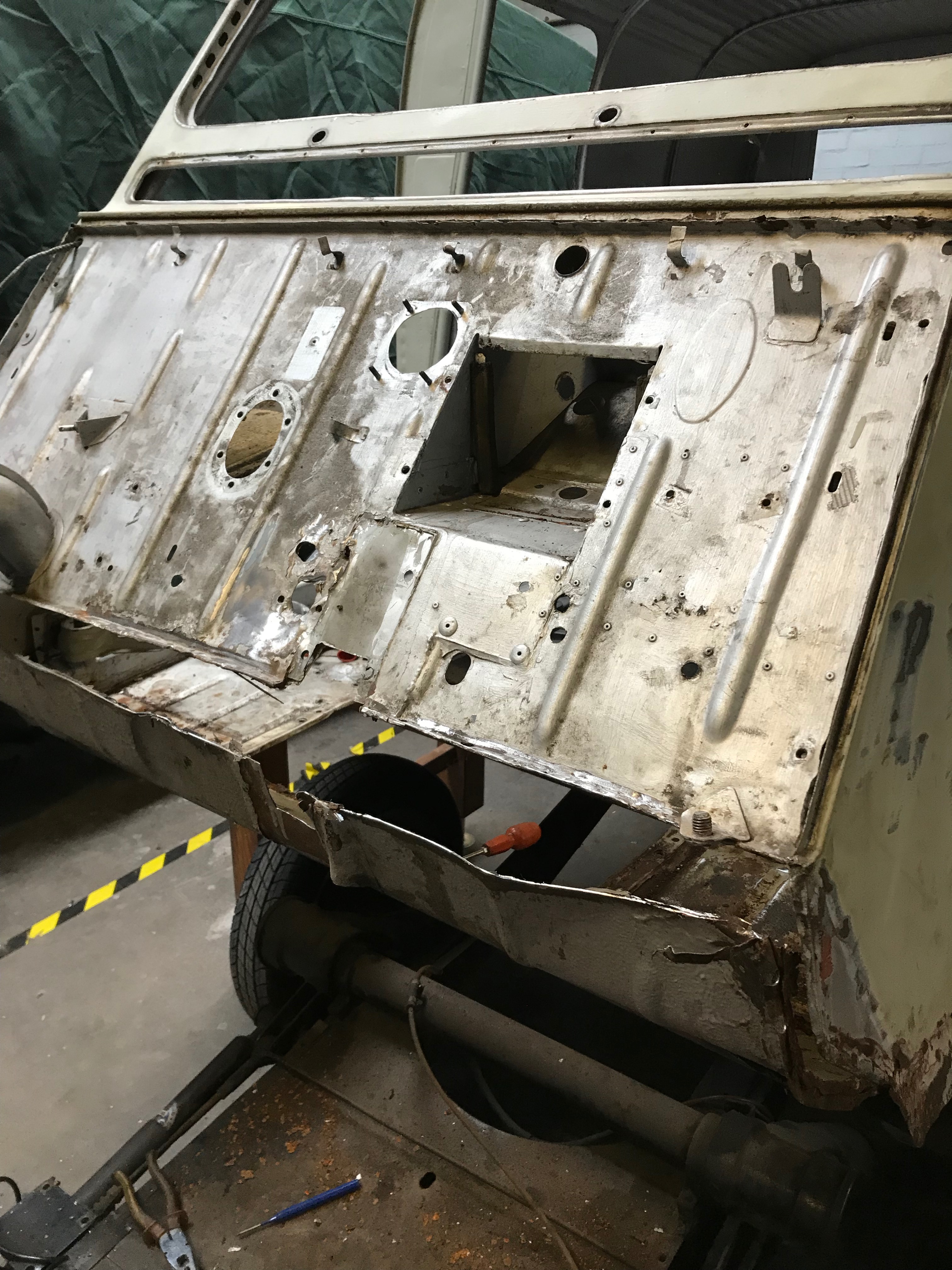
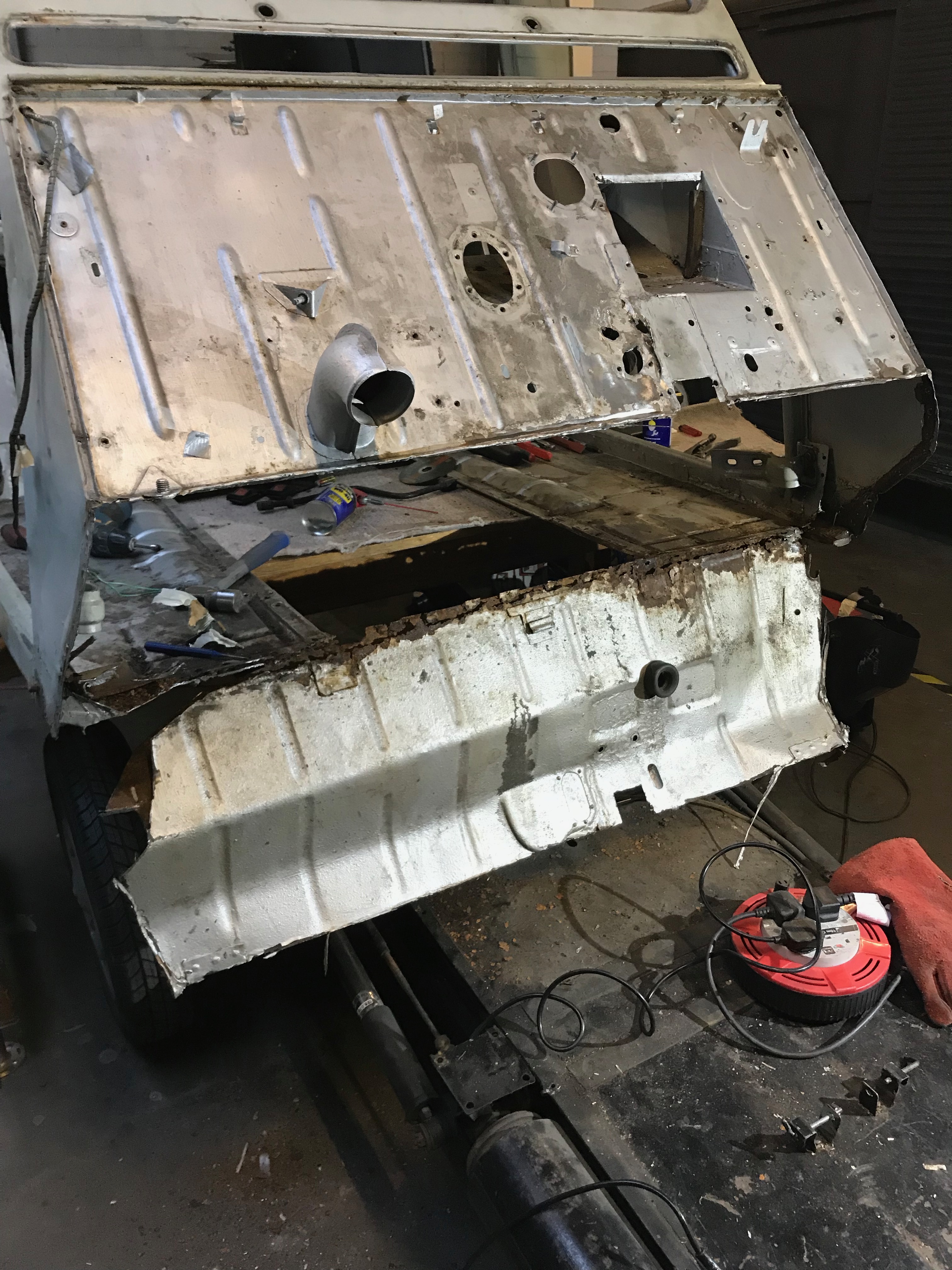
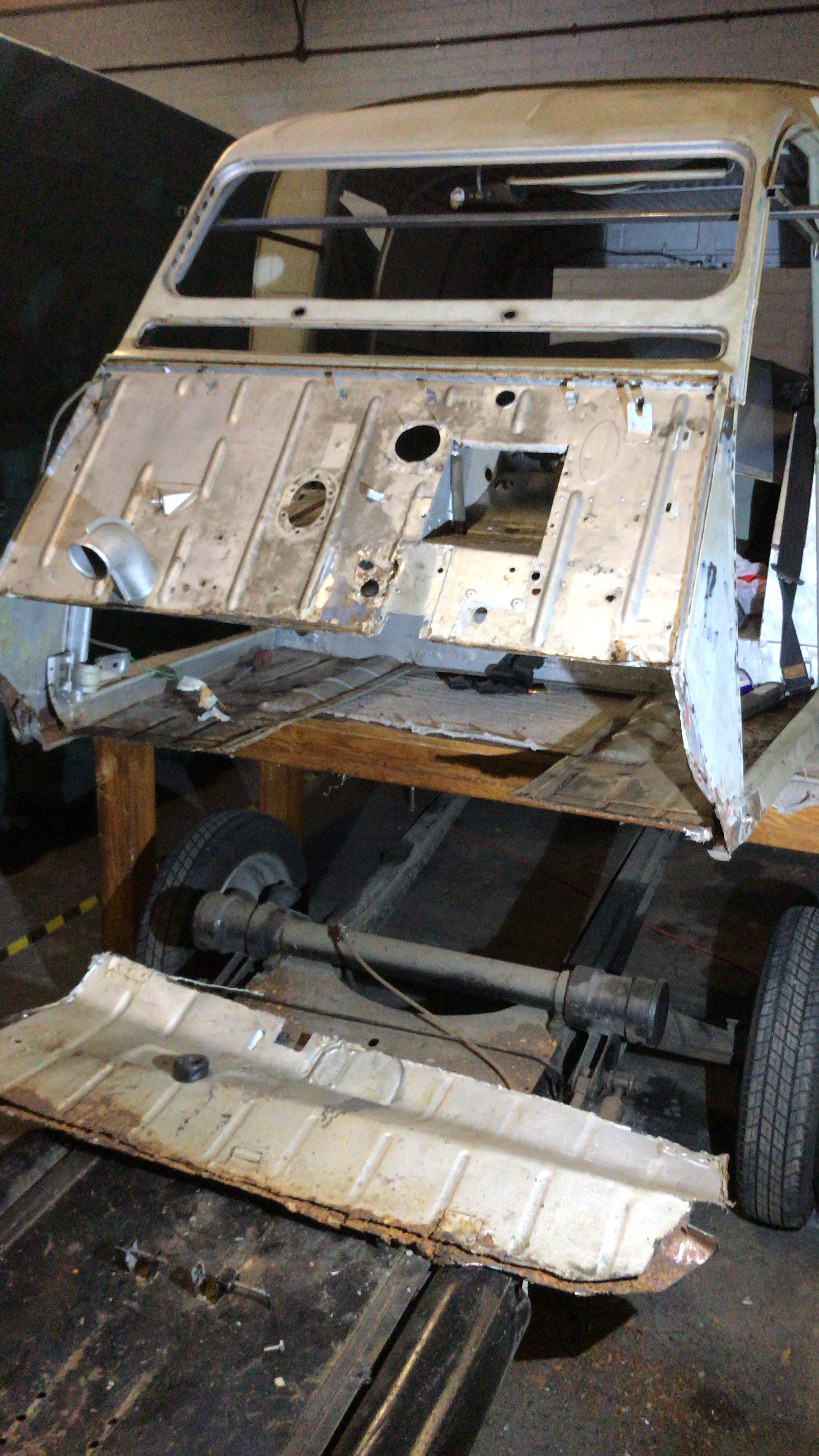
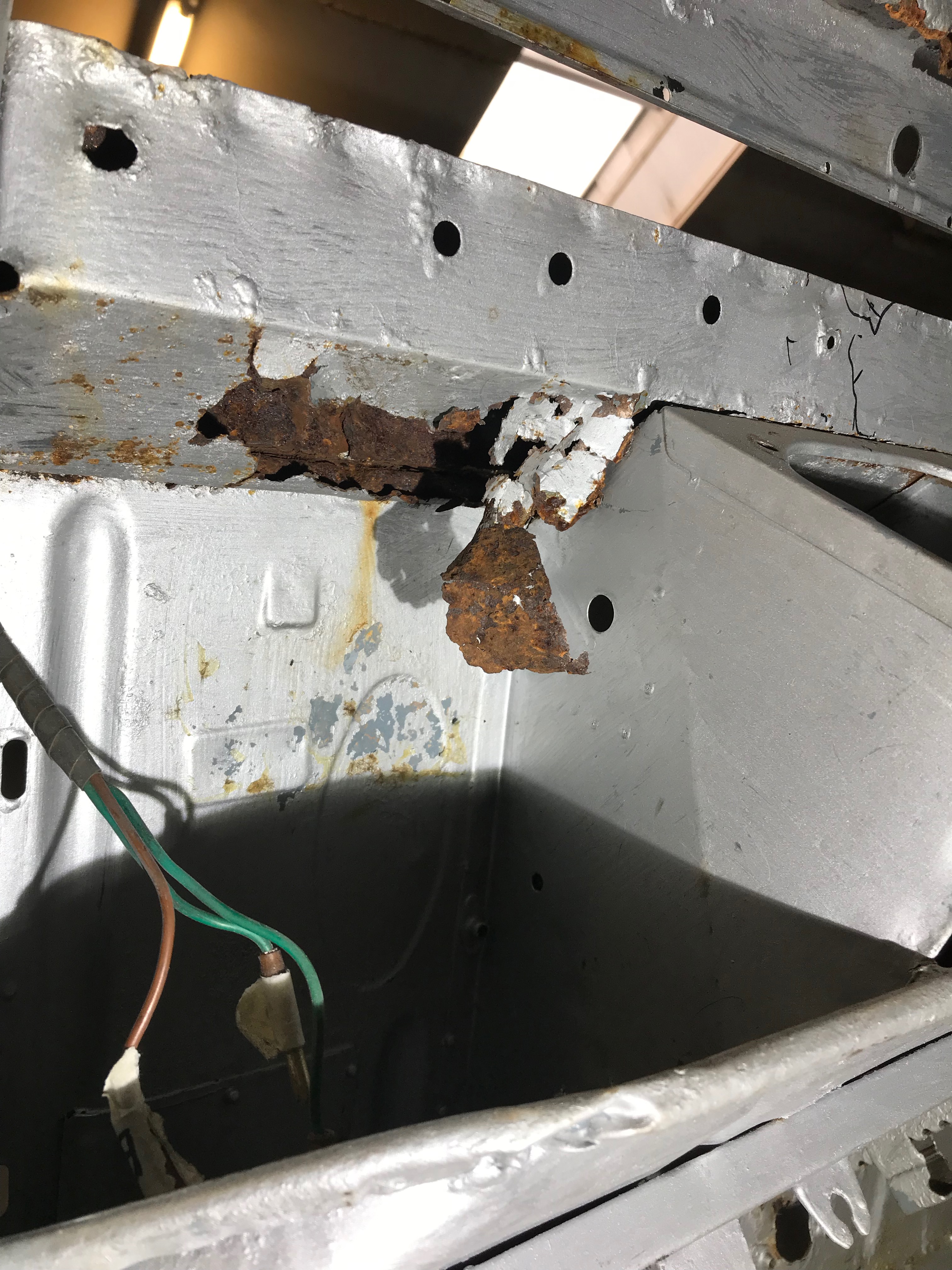
Here are few pictures to show the extent of the rot in the upper part of the firewall, ventilation flap area and the lower part of the windscreen surround. 

I had not expected it to be as bad as this – it really is horrible and almost certainly beyond repair. 
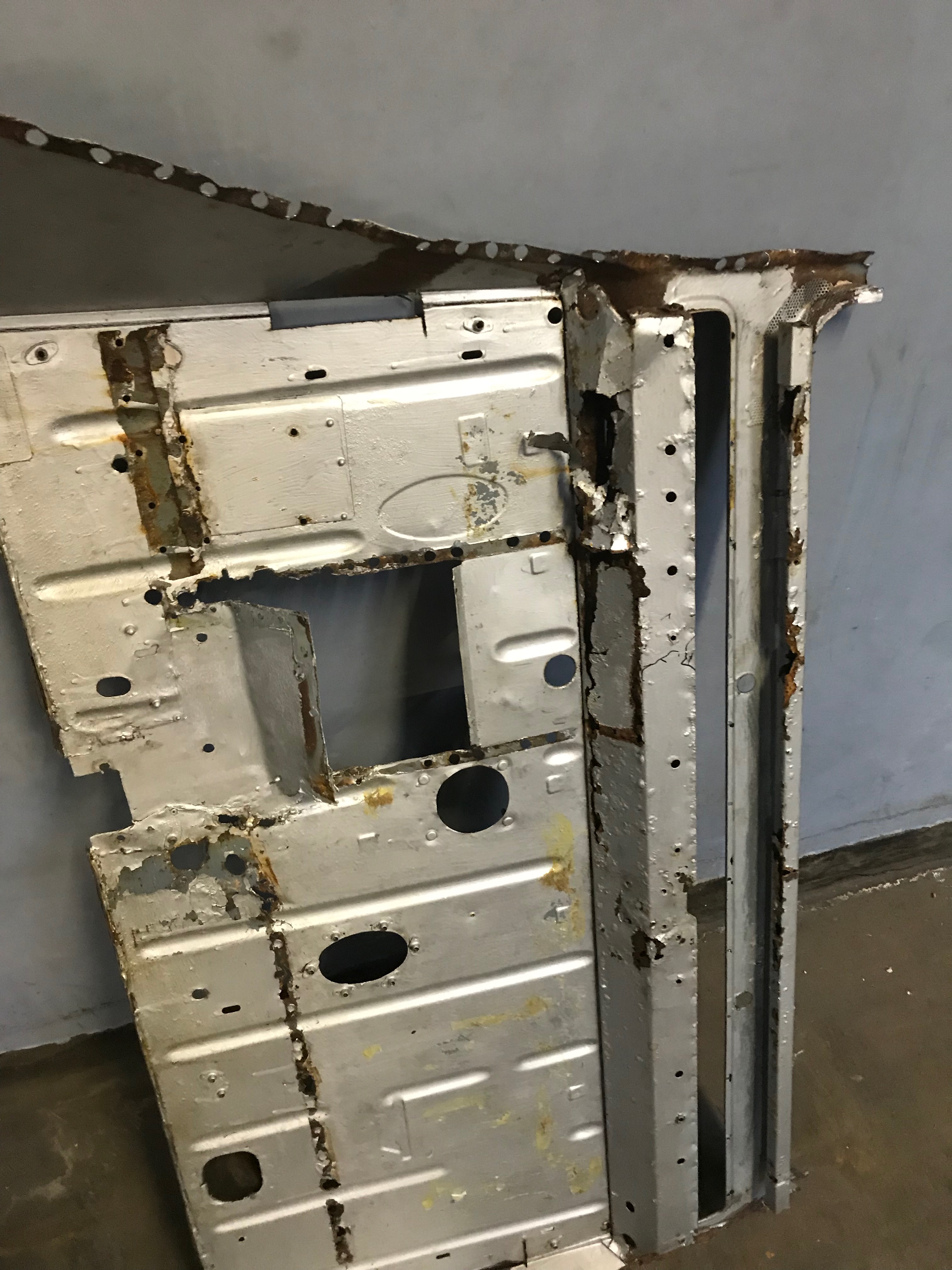
Looks better than it is when painted silver!
Evidence of a past repair
Not much of the upper scuttle panel left – a classic ‘rust from the inside out’ problem

Anyway – after a trial fit of the new toe board, bulkhead and A panels, I can honestly say they don’t all fit together as expected. There’s no denying it, the fact is that they just don’t fit together at all.  

It’s not easy clamping the panels together when you don’t have enough clamps and only one pair of hands. I’m not likely to grow another pair of hands anytime soon and by the time evolution delivers them to the human race, no-one will give a fig about me and my van, so I’ll get some more clamps.

It’s as if the front of the Van is 1cm narrower than it should be.  The toe board won’t fit into the gap left behind when I cut the old panels out which is odd because I made sure to weld some braces across the front of the A pillars and the B posts before cutting anything so I could be sure that nothing could move. As all the other bits join on to this vital piece, everything is just a little bit out of whack.

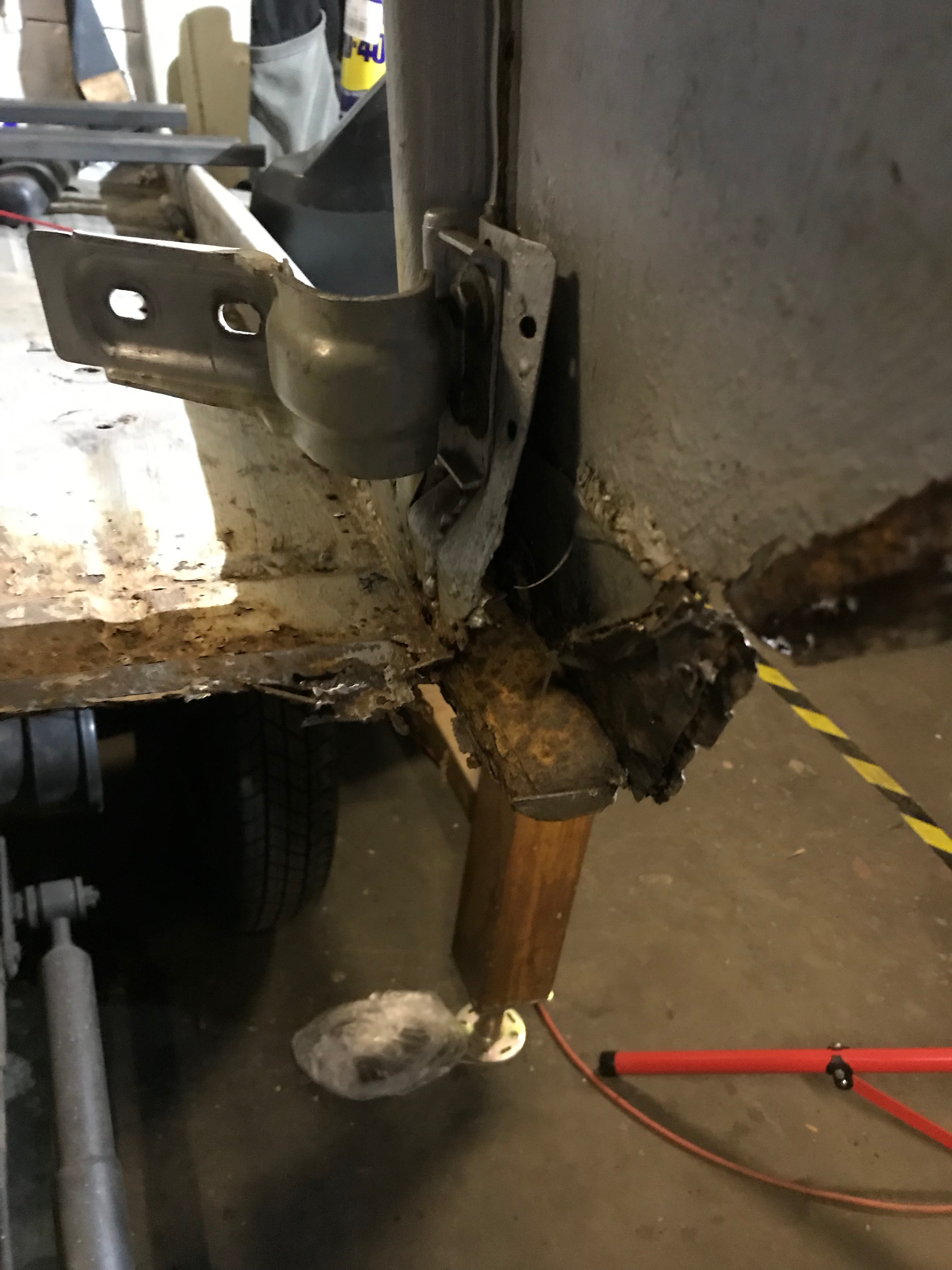
Here are a few shots of what’s left of the front of the sills – these need to be the right shape for the toe board to slot into.
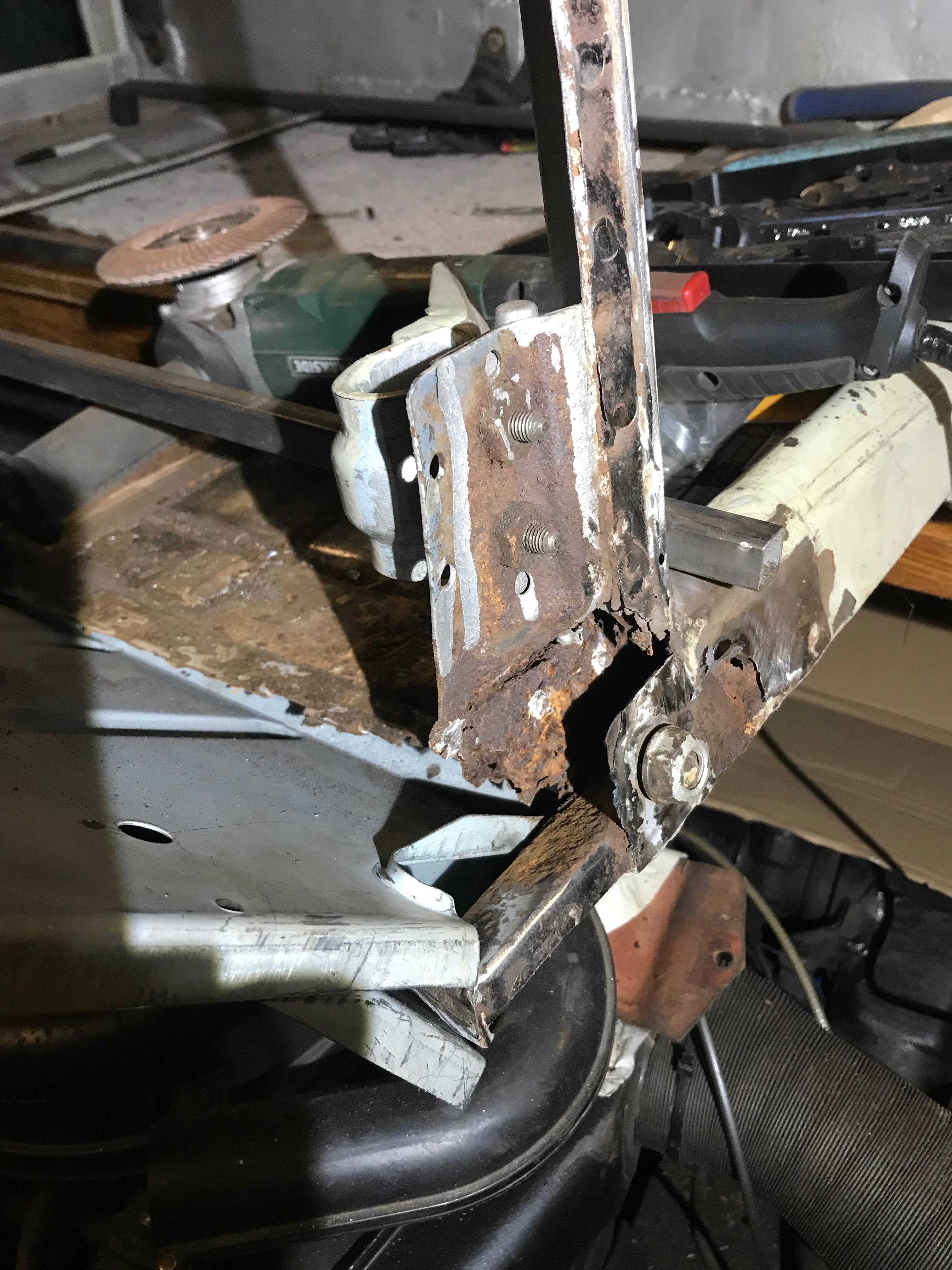
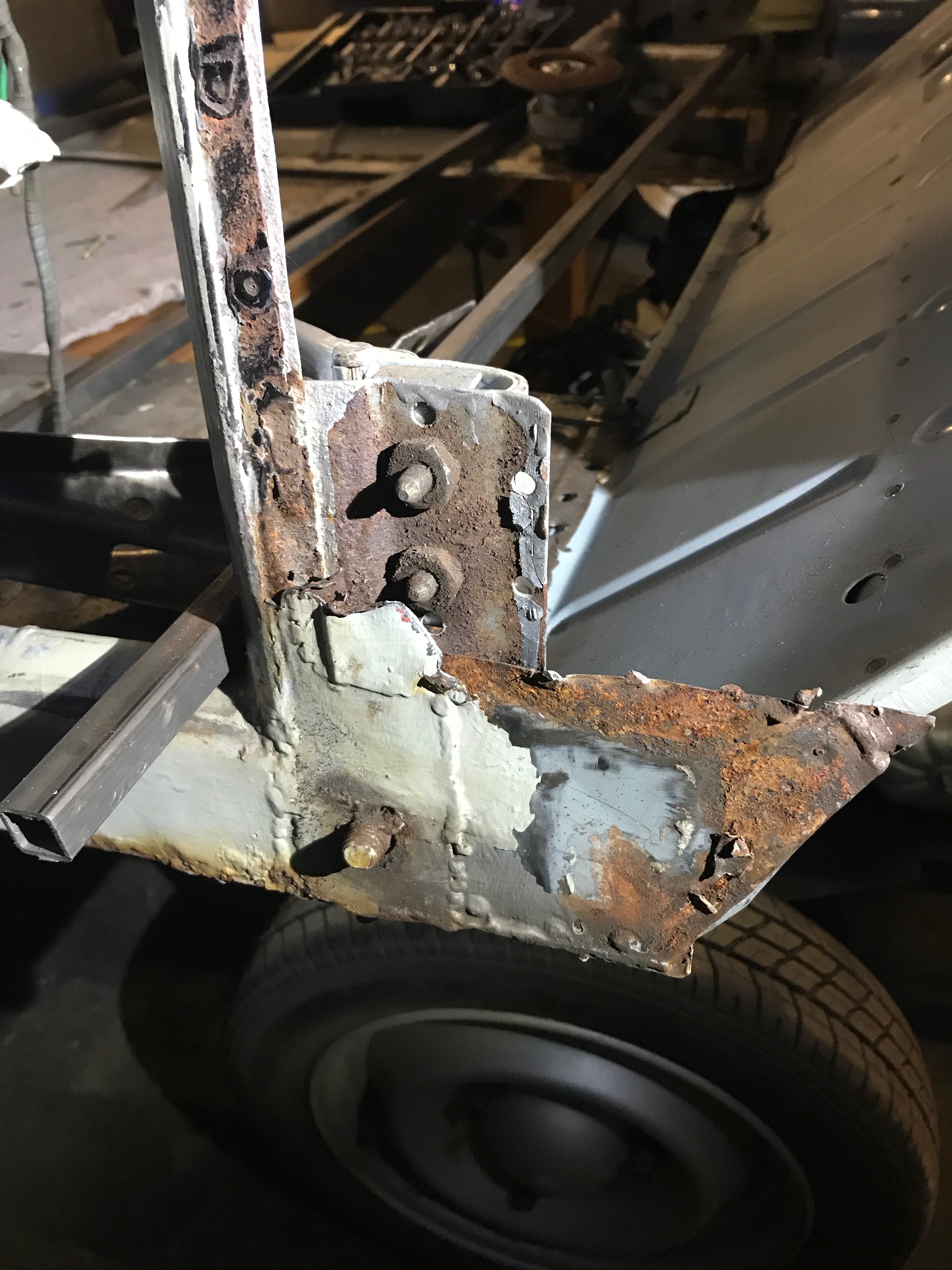
The left hand sill – it looking from the front
Right hand sill area from the outside. The sill should extend forwards from the wing fixing by 15 cm or so, all that was there was a bit of A panel repair
The left sill from the outside, looking pretty horrid

The only conclusion I can make is that ‘suffin hint roite’ as they say in Norfolk, or it wasn’t right to begin with. When the van was last restored, repairs were made to the floors, toe board, A panels and sills.  Extra metal was added to the front of the sills (ahead of the wing fixing), to the lower part of the A panels, the front, back and all along the sides of the floors where they meet the sills.  So – I think what may have happened is that the A posts were cut away from the sills which were then repaired before the A posts were welded back on again – and that during this process, something might have shifted and it all went a bit pear shaped. The doors don’t fit very well and this is consistent with the A and B posts being out of alignment. 

I don’t want to repair the front of the sills by letting in new metal – I probably could get away with it (my welding is not that good), because it won’t be visible, but then I can’t guarantee it will all fit together as I will have lost all of my datum points  – or I’ll have to rely on measurements which were incorrect at the outset.  Also, it will be a bodge and will therefore bother me ever so slightly whenever I think about it, which is something I can do without.

Plan ‘B’

Here’s the new plan. I’ve ordered a new pair of sills, 2 new floor pans (left and right) and a 400 mm of A post repair section which came with a short length (10cm or so) of ¾ inch tube and 3 of those captive rivet things that have a thread inside for a small machine screw and a single nut, bold and a couple of washers. Does anyone know what these are for?  

I already have 2 floor repair panels but the nice people at ECAS said I could send them back for a refund. This might sound like it’s a cop out – and it would be if this part of the van hadn’t been repaired a good many times since leaving the factory.  I really don’t have a choice, unless I want to spend days and days cutting and welding in more patches on top of patches.

Oh – and if anyone out there has a 2CV and it’s starting to go a bit crusty round the edges, my advice would be to cut out and replace like for like as opposed to letting in patches or worse, welding patches over existing metal / rust.  It might do the job short term but sooner or later, someone is going to have to put it right.

What to do first? I will make a jig out of welded 1cm box section to match the holes on the chassis where the floors are bolted down to and where the centre cross member bolts to the chassis.  I can use this jig (frame) to line up the new floors and sills and then trial fit the doors, weld in the A post repair sections and re affix the B posts.  It has just occurred to me that I’m going to need some new bottom door hinge brackets – these are welded to the A post and to be brutally honest, they’ve been repaired once already and are not likely to survive another encounter with Mr MIG.  Right, better order them..

Once this lot is in, the toe board, bulkhead and A panels can be attached.  Then the screen repair can be let in.  With the body bolted to the jig, I can be sure that the body will fit back onto the chassis, because all the bolt holes will line up nicely… At some point during this process, I will lose confidence in the jig I have made and will want to put the body back onto the chassis – just to make sure.  

The biggest obstacle to progress will be committing to actually welding, as opposed to a few weedy tacks here and there. I think I’ll trial fit everything first with self tapping screws. 

There, I’ve summed up in a couple of paragraphs, what will surely be weeks’ worth of work and head scratching.
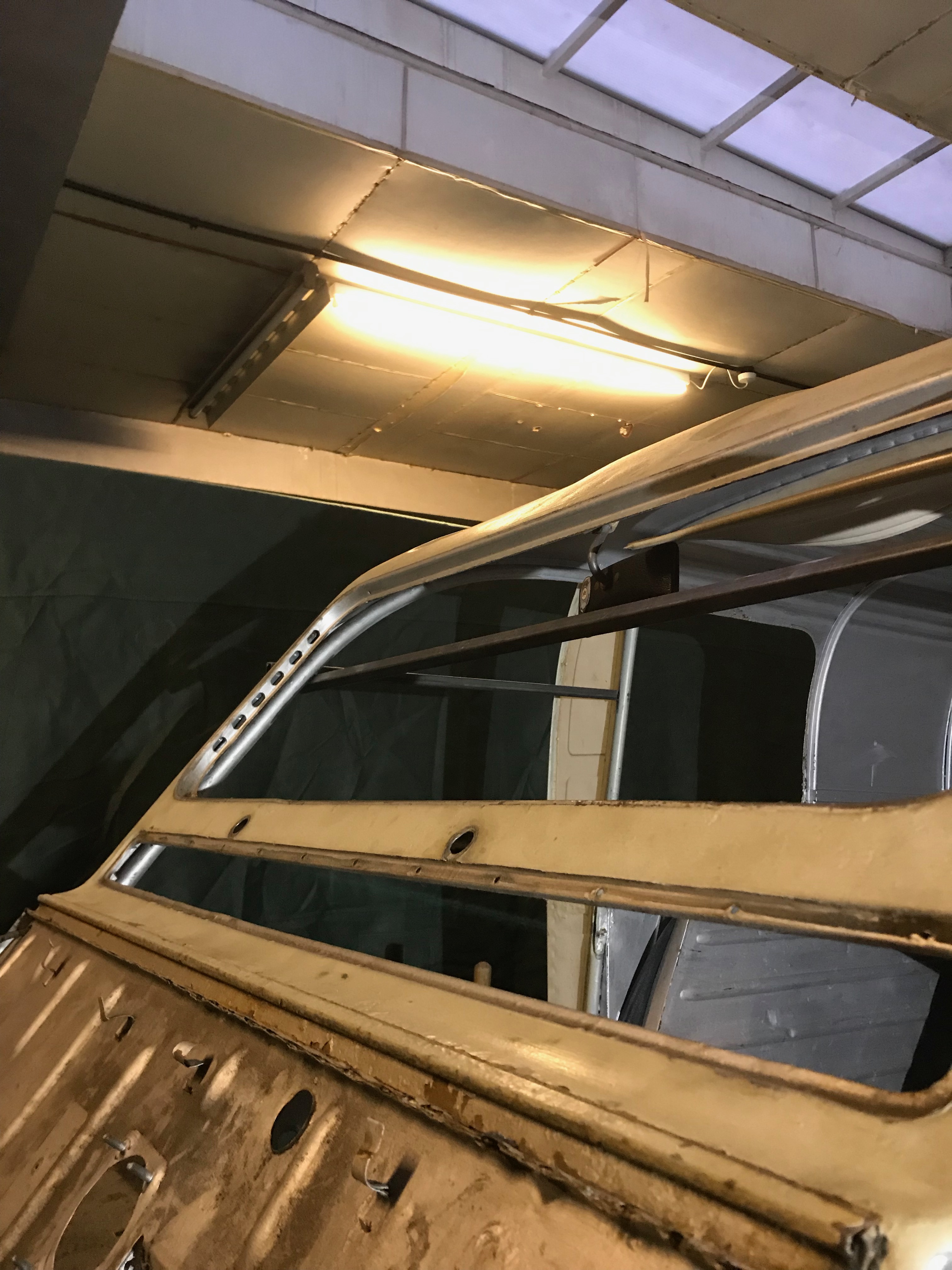
A low point

Looking closer at the join between the firewall and the windscreen surround there are 3 parts joined together along the top seam.  The firewall forms the bottom edge of the seam, sandwiched in between is the cross-member which holds the wiper motor in place and then on top of this, is the lower edge of the screen surround.  The likelihood of separating this metal sandwich without losing the top edge of the firewall is zero.  The only solution is to chop the whole lot out and replace it all with new panels. 

The seam at top of the firewall just under the bonnet hinge – crusty and friable

Firstly, I drilled out the spot welds which hold the A panels to the door pillars and popped the panels free. Next to go were the 3 spot welds on each side of the windscreen pillars, which enabled me to peel back the edges away from the upper part of the A posts.  The A panels weren’t really joined to the sills at the bottom – the previous owner had put some new metal in around the bolts which hold the wings to the sills and tacked what was left of the A panels to the new metal and then ground it flat (ish), leaving a sliver of metal which was feathered away to nothing. This area will need rebuilding.  Careful application of the angle grinder and hacksaw enabled me to cut through the outer skin of the windscreen panel.

With the upper 3 spot welds drilled out, I could peel back the windscreen surround from the a pillars
Careful use of the angle grinder – I did the rest of the cut with a hacksaw so as not to chop into the a pillar
This inner crossmember needs to be cut through – the one below is not attached to the a posts

After removing this cross-member, the outer skin of the windscreen was ready to make a break for freedom.  The large and unwieldy 3 sided floppy bit of metal that is the front and sides of the van was loose but would not come away because the door hinge reinforcing plates are sandwiched between the firewall and the join with the A panels  – shown here

Cut around the area where the top door hinge is sandwiched between the side of the firewall and the A panel

While I was contemplating my next move, Steve popped round to the garage with a new pair of overalls and some sage advice, which was to try and remove the firewall, A panels and windscreen surround in one piece.  That way, I’d have something to measure and take reference points from, should I need them later.. so that’s what I did

Looking rather forlorn and tatty

Here’s the firewall and screen out.  Next job is to clean up the A posts so I can weld the new panels in.  I’ll chop out the worst bits and mig in some patches where I need to.  I don’t want to separate the sills from the A posts as I think the whole thing will spring apart and I’ll spend forever trying to line it all up again.

 The parcel shelf will need a repair along the whole of the front edge.  I’m really not sure if it’s thick enough to weld, so I might just have to make a new panel. I don’t have a swaging tool, so I’ll re-inforce it with some 5ml bar if I think it needs it.  

It was hard to separate the firewall from the parcel shelf.  This had been spot welded from the inside, but the welds were invisible from the firewall side, so it had to be separated from the inside.  Removing the spot welds pretty much destroyed the parcel shelf flange – I gave up and used a hammer and cold chisel. 

As you can see from this picture, the battery box and instrument binnacle are also a tad frayed around the edges. 

Unpicking the A panels

Not the most riveting of tasks, but here’s how to release a spot welded panel.   Use a spot weld drill – mine came from Machine Mart , they are a worthwhile investment, however when you have finished your car project you will no longer have a use for it, you will put it somewhere ‘safe’ and never see it again.  Eventually you will either forget about it altogether or the memory of it will become enhanced with properties it never had originally, whereupon it can be added to the list of topics discussed at the Old Man’s Memory Club that you and your friends create every Thursday night at the pub.

Other things regularly discussed at the Old Man’s Memory Club

  • Pete F’s car bulb collection
  • Steve’s list of projects which are all in a state of suspension due to other commitments
  • Pete R’s love life (lack thereof)
  • The price of beer
  • Whether anyone has seen or heard from Bill 
  • What Pete F and I bought last week on eBay
  • Whether Chris is coming out 
Carefully use the spot weld drill to release the panels from that to which they are welded

As can be seen above, it’s very easy to go right through the panel. The spot welds higher up the screen were easier to deal with. Less corrosion = more metal

Anyway – the tool has a spring loaded pin in it, which acts as a guide and the idea is to cut through the first layer of metal only.  Assuming of course, that you’re not trying to unpick a 2CV which is made of tinfoil thin metal, in which case you’ll drill through both layers before you know it.  Things to be aware of:  2CV spot welds are never quite as uniform and orderly as they are on a modern car.  They were done by hand,  so some are close to, or on top of other spot welds.  Welded metal is also much harder than mild steel  – I’m not a metallurgist but I guess it has something to do with annealing and heating as opposed to kneeling and seating.  Spot welds on the 2CV are augmented with braze, which is used to seal up the gaps and make good the joins.  Nowadays, we use filler and mastic.  The old ways are better, because braze doesn’t fall out or crack over time. It is also very hard to remove if you don’t have a proper blowtorch, which I don’t.

Spot welds drilled and ‘popped’ off the A post

For spot welds, a combination of drilling, prying and cold chiselling works best.  I’m only keeping the door pillar side of the A panels, the rest I can hack off or chop out with the angle grinder and a 1ml cutting disk.  A word of warning.  If, like me, you think it’s a good idea to remove the guard from your angle grinder, watch out.  1ml cutting disks have a habit of exploding and if they do, all sorts of sharp bits of them will become embedded in your face. This will ruin your day.

You can see here that under the seam which has been unpicked, it has been quietly rusting away.  The door frame is much thicker than the A panel, so eventually the A panel will rust through and pop off.  After I got the A panel out of the way, I turned by attention to the firewall.  This has had some extra metal added to patch up the battery box and provide support for the parcel shelf.  There are lots of rust holes in the parcel shelf and these have been patched with angle pieces, which have also been pop rivetted to the firewall.  I spent ages drilling out all the pop rivets I could get to and freeing off the spot weds that hold the instrument panel on to the firewall.   When I get the firewall out, I see what’s left of the parcel shelf.  Parcel shelfs are available, but that’s another £80 to shell out.  I’ll probably have to make a new instrument binnacle anyway, so I’ll be better off spending the money on a metal folder (£60) which I can also use for the parcel shelf repairs.  When I’m done with the metal folder,  I’ll store it with the spot weld removal tool.

I picked up a pair of rear panels on eBay which were delivered today.  They are for an AK400 but it looks to me like I can use them with a bit of fiddling here and there.  The van has had the bottom section of these panels replaced as part of the last restoration, so I can do a tidier job by replacing the whole lot.  Incidentally, they only cost £65 for the pair.  New price for the same panels is £105 each.  If I don’t use them, I’ll be £65 out of pocket and if I do use them, I’ll be £65 out of pocket, plus I’ll have spent loads of time replacing something that no-one will ever notice. This job is therefore not priority at this time.


Decisions, decisions..

Having chopped out the bulkhead and made the decision that I’ll replace the lower section of the windscreen and the A panels, I’m wavering around the recent decision to keep the old firewall.  Initially I thought I’d replace it because it would give me 4 nice new edges to weld the other repair panels to.  The downside to replacing it is that the thingy which holds the speedo binnacle in place will have to be detached from the firewall along with the battery box.  Both of these parts are mish-mash of pop rivets, seam welds, spot welds and other bits and bobs of metal let in.   Also, the correct part is not available, so I’ll have to make it fit.

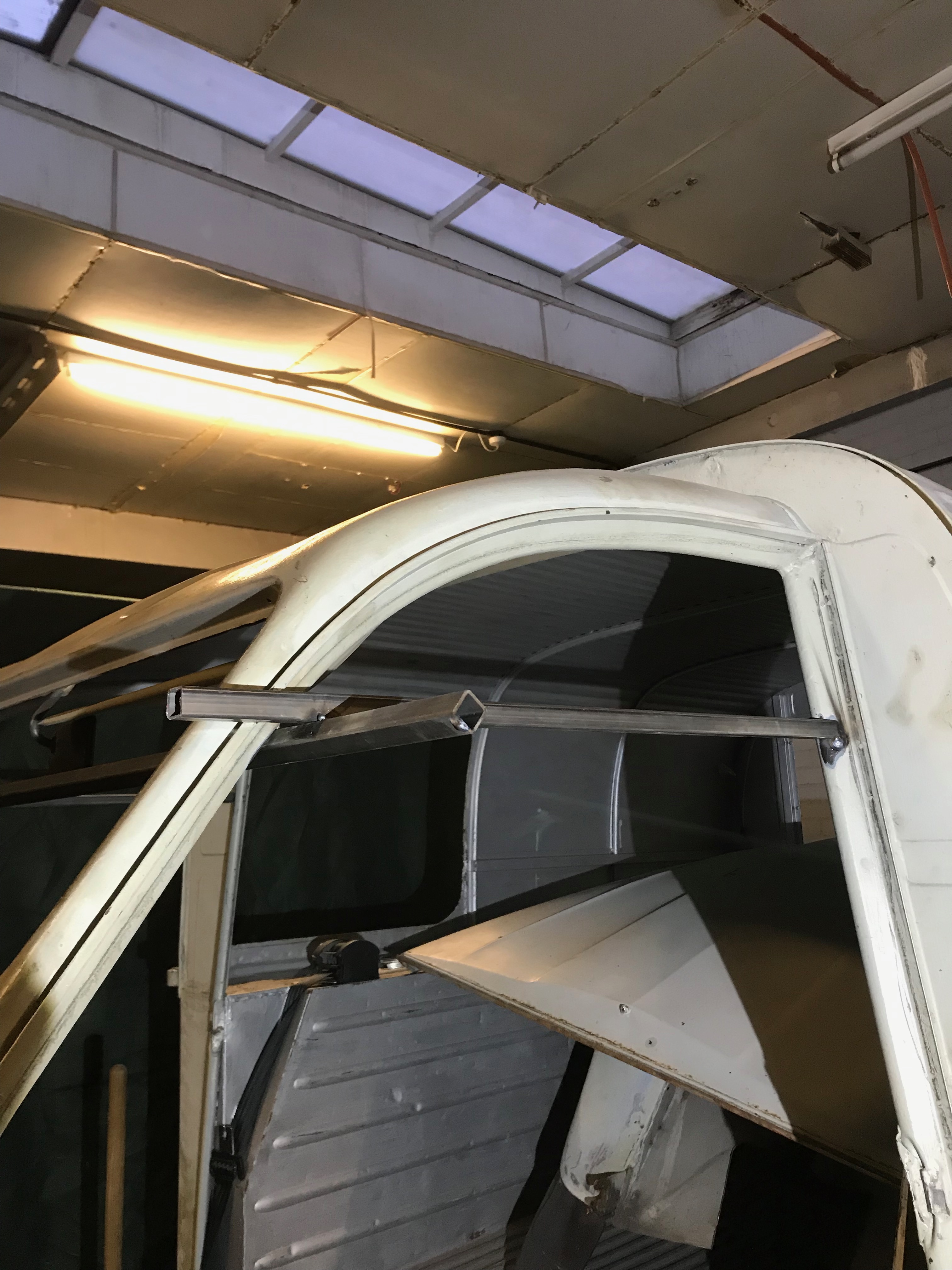
Some box section braces welded to the shell – hopefully it won’t fold in half when I cut the rest of the rust out

I have 2 choices

Cut out the old firewall with the speedo binnacle, battery box and parcel shelf still attached. Stump up another £180 for a new firewall and spend a few days putting the parcel shelf, speedo binnacle and parcel shelf back together – or remaking them where I need to.  I’ll have to add some more braces to the shell so that I don’t lose all the datum points.

Use the old firewall, which will mean effectively taking it out and putting it back in again.  I will have very little good metal around the 4 edges to weld it back in again and I’ll have the added hassle of trying to re-fit the speedo binnacle back in (I’ll have to cut this out to get the windscreen repair panel in) followed by taking out and refitting the parcel shelf

I think I’ve talked myself into buying a new firewall, for the sake of ease.  This reminds me of a chap I used to work with who’d mix metaphors and create whole new malapropisms.  Some of his gems were adopted by everyone else in the office and became common parlance.  One of these was ‘for the ease of sake’ – if you say it enough times, it makes more sense than ‘for the sake of ease’. 

Inside the A panels – lots to do here

I’ll post some more pictures when I have the A panels off and the firewall out.  There won’t be much of the cab left, so the bulkhead, A panels and firewall will need to go in before I chop the screen out (I think…) Maybe I’ll get away with chopping out the whole lot and doing it all in one go.  Ever the pragmatist…

The windscreen surround, bonnet hinge and the top of the A panel. This is where the water comes in, runs into the top of the bulkhead and down into the floors. I’ll be cutting all of this out next

I’ve also got a couple of ¼ panels for each floor.  These will be welded to the sills and the bulkhead but not until I’ve put the body back onto the chassis so that I can line up the bolt holes – or I’ll make a jig to replicate the chassis mounts.

Once the front is back together, I can turn the body upside down and sort out the underside. There are a few crusty bits to repair underneath, but on the whole it looks to be very sound.  Mind you, that’s what Pete said about the front.

Demontage – the easy bit

The workshop

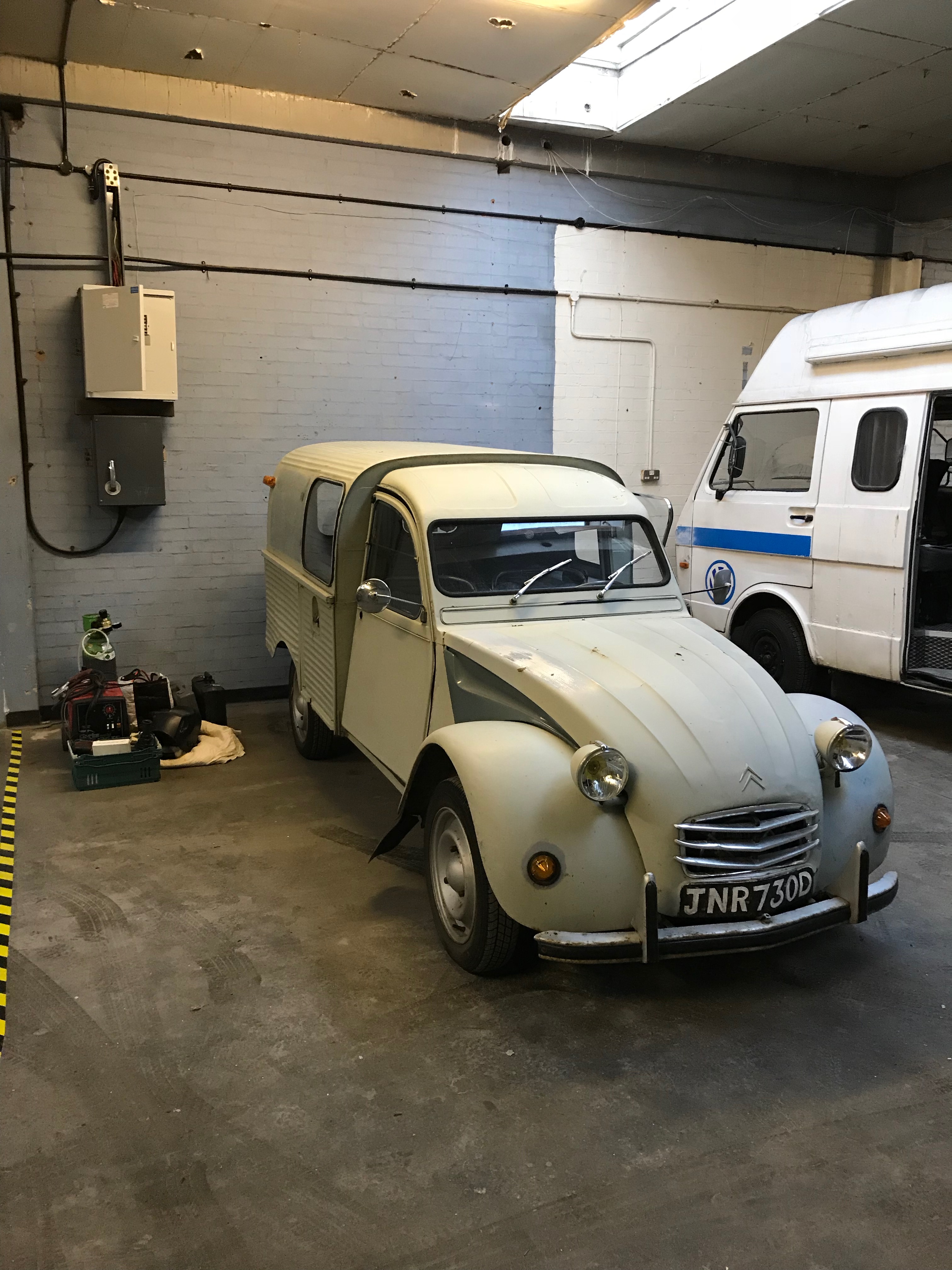
The workshop I am renting is freezing cold.  This is less of a problem than the sparse fluorescent lights which just make the place look downright depressing.  Grey concrete, grey lights, grey van.  On the plus side, one of the other chaps is doing up a VW Camper van and has created a hack space with all manner of tools and equipment in it, some of which I can use / borrow on the understanding that I contribute some of my time to teaching others how to weld and make some of my equipment available, should anyone need it.  The hack space has everything I have and a lot more besides, so this is a good deal.  I now have access to a monster compressor, TIG welder, metal chop saw and drill press.  We don’t have a sheet metal folder or press cutter.  I reckon I can make a metal folder (out of metal) or get someone to make it for the hack space if I supply the steel and /or pecuniary enticement.

As far as the van is concerned

Stripping down

I have removed everything I can from the body.  Some interesting points to note:  The wiring is all the same colour (green) but is identified by different coloured end plugs and corresponding sockets.  These are either brown, black, green blue or yellow.  In the main, the socket colour is the same as the plug, but not always, so I’ve had to label everything.  Actually I didn’t label anything that looked to have an unambiguous home or it was obvious where it should go.  No doubt this will cause me huge problems when I come to put it all back together…

The front wings are held on by 3 large nuts – I get the feeling that that in an accident they would sacrifice themselves by crumpling up and detaching rather than damage anything

The rear wings would have originally been welded to the body, but somewhere in the past, they have been removed, repaired and put back on with dozens of tiny set screws and nuts, most of which sheared off when I tried to undo them

Doors – only held on by 4 bolts each

Rear doors – held on by the same tiny nuts and bolts as the wings

Bonnet, petrol tank and spare wheel cover just slide off their hinges

With everything that can be unbolted out of the way, I’m left with a naked shell.   I didn’t have a workshop manual (I do have one somewhere but I can’t find it) but luckily, my sister bought me an Airfix kit of the same van for Christmas, which is uncannily accurate in detail and construction so I was able to use this for reference.  After I’d done all of this, I ordered a ‘How to Restore a 2cv’ book from Amazon at great expense (£50) and whilst I waited for it to arrive, I found a copy in the library – which was irritating.   It must be a man thing.  Similar to when I decorate the house, I start off by painting in the clothes I have on at the time and only change into old clothes when I’ve got paint on my best clothes.  I’m never short of old clothes, because everything nice I own has been ruined.  Because I am convinced at the outset that I can paint without getting any on me, this is an ongoing and expensive problem.

I think my original workshop manual ended up in the charity shop over the road after one of Julia’s clearout sessions.  Normally I would have found it when browsing for some other rubbish and simply bought it again – coming home and announcing to Julia – ‘look what I found in the Charity shop – I used to have one just like this, what a stroke of luck’.  However it’s not there, so there must be someone else in Norwich who’s restoring a 2CV.  I wonder how they are getting on?

Back to the van – nuts and bolts

One of the other quirks of the Citroen 2CV is the use of odd sized nuts and bolts.  M7 is one of these oddities.  I challenge anyone to try and find M7 nuts and bolts in any DIY store, builders merchants, nut and bolt specialists – in fact anyone bar Citroen themselves.  ‘They don’t exist’ is a common response.  Well I can tell you that they do.  16ml is another odd size – how many socket and spanner sets have 16ml included?  None.  Why then, did Andre and his friends choose to use 20 or so M7 set screws to hold the body onto the chassis for the 2CV?  We will never know. 

I was expecting the body to chassis bolts to be properly rusted in and had all sorts of thoughts about cutting them off with the angle grinder, hacksaw, drilling and re-tapping.  However, they all came out easily except three, which were holding the bulkhead and front of the  floors to the chassis.  These simply remained screwed to the chassis as the 3 layers of friable crusty steel around them broke away like puff pastry.  With all of these out, the only thing holding the body on was the brake master cylinder.  Mr Haynes says ‘undo the brake pipes, 6 carrier bolts, fluid reservoir, pedal assembly and simply withdraw the master cylinder through the bulkhead into the car.  I couldn’t.  The previous owner had at some point decided that 6 M8 nuts and bolts were not sufficient to hold the master cylinder carrier onto the bulkhead and had also welded it in place.   I cut it out with the angle grinder and spent an hour cleaning off the welds rather than pay out £45 for a new carrier.  Deeply satisfying.

Glass removed
The rats nest that is the wiring loom

Body off

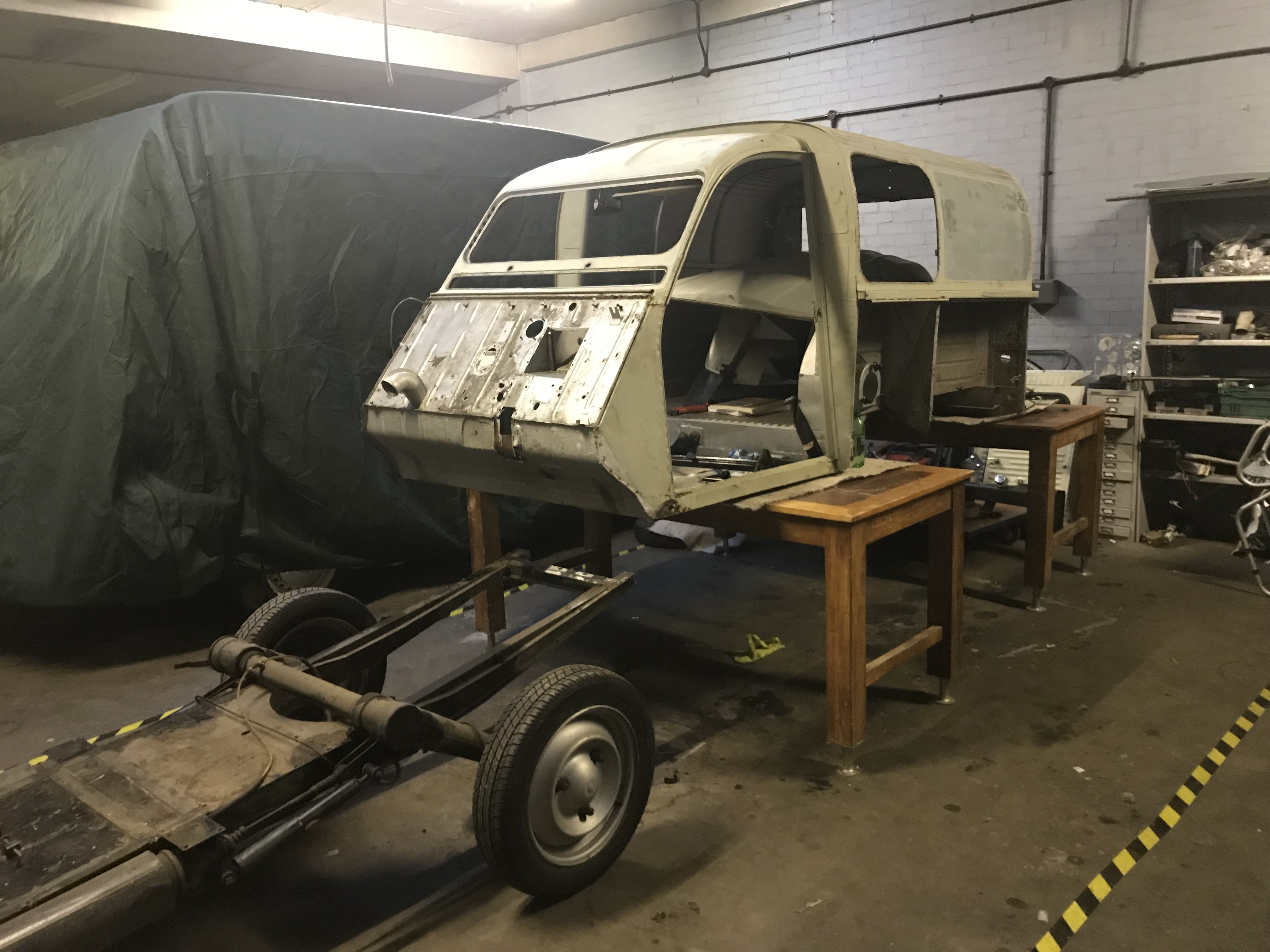
This is the bare shell lifted off the chassis  Luckily it’s not very heavy and with the help of friends Pete and Steve (who I’d invited down to the workshop to see how I’m getting on) peeled the body off the chassis and sat it on a couple of tables.  This enabled me to wheel the chassis, complete with engine, gearbox and wheels out from underneath the body so we could get a better look at it.  ‘It’s not too bad’ declared Pete.  Steve’s silence was palpable.  I began to question my own sanity,  wondering how on earth I was going to fix it all.  Having restored a Triumph Spitfire a few years ago, I knew that there were horrors lurking underneath the benign exterior.  Like most cars, the 2CV rusts along the seams and from the inside out, so by the time you see the signs of rust showing, its already well established and the damage can be quite extensive.  All the old rust really has to be cut out and replaced with good metal.  It’s no good just covering it up. 

Body off the chassis and on the operating table, ready for surgery

Cutting out the rusty bits

Here’s a good example of what happens when water seeps into a seam where 3 bits of sheet metal are spot welded together.  It looks ok, feels a bit crunchy and can’t possibly need anything more than a good wire brush and a coat of hammerite.  Well, if it was a garden gate or wheelbarrow I’d be inclined to agree.  When it’s the only thing between you and getting acquainted with the engine and gearbox in the event of a front end shunt, it doesn’t really cut the mustard if there’s even a hint of corrosion on show.

The front of the floors – both sides were crusty and the bulkhead had split open when we took the shell off the chassis

This bulkhead assembly is a double skinned panel which is spot welded every inch or so along each seam – top, bottom, each side and inside.  That’s an awful lot of spot welds to drill out.  As I’m going to replace the entire panel, I decided to cut it out with the angle grinder, except for where it joins the A panels (left and right sides).  For the sides, I drilled and unpicked the spot welds, because I was pretty convinced that the A panels were ok – they certainly looked ok…

Inside the front of the van – I’ve removed the pedal box and cut across the bulkhead with the angle grinder
Opening up the ‘can’ from the outside
Almost off – hanging by thread
And out
Inside the dashboard – under the ventilation flap. More rust which is beyond repair

A batch of new panels arrived today.  New complete bulkhead, floor repair panels, windscreen and ventilation flap panel and a few other bits and bobs. I’d been convinced I didn’t need to replace the A panels, but when I took the bulkhead out and looked inside, I could see that the for the sake of more time and bit of extra money it would be stupid not to chop out and replace the A panels as well.  So there we are, a lesson learned.

Putting the new bulkhead in will be first.  I’m not convinced I can save the firewall – the leading edge where the windscreen joins it is extremely thin and I think it will be difficult to weld to.  There’s a bit more metal to weld the bulkhead to.  Maybe I can make up a new flange.  That metal folder would be really handy right now

The worm can – the beginning

An essay about the restoration and repair of a 1966 Citroen AK 350

The art of the possible – Otto Von Bismarck

It is possible that some of these posts will be of use especially if you are of a certain age, have decided to restore an old car, don’t quite have all the requisite skills and are of the ‘how hard can it be’ persuasion. 

To start:  Firstly, select your project.  For me it had to be a Citroen 2CV Van.  I had one of these in the late 1970’s, which my father kindly bought for me.  A 1976 Citroen AK400 in Orange.  Actually, he bought it for himself but not being remotely mechanically minded or blessed with any manual skills beyond pulling a lawn mower starting string, he gave it to me with a ‘look what I’ve got you’ flourish of enthusiasm , which at 19 years old was enough to convince me that I must have it and that it was the best gift that one could ever have. Every surface was covered in guano.  ‘It was owned by a chap who used to keep birds of prey’ said my father – and at 19, this only added to its desirability.    It was rotten to the core.  The front wings were perforated with holes – like a cheese grater.  The bottom 3 inches of the rear doors were made of rust held together with a thin coating of Orange paint – it had rust and it had it bad, but I loved it.  I kept it for a few years, during which time I replaced the wings and the rear doors, the rusty flap at the front and painted over the rest of the rust with some new fangled acrylic orange paint.  I had a lot of fun in that van and regretted selling it, but we needed the £400 to fund a trip round Europe, so it had to go and ever since then I’ve been looking for another one.

About 5 years ago, I found one. A  Citroen AK350.  Older and more desirable than the AK400, with its lower roof line, longer rear body and ‘small ripple’ panels.  It was on eBay and was in Stalham – just 15 miles away and no-one had bid on it.  I went to have a look at it first, which is unlike me,  as I was pretty convinced I would buy it anyway, it seemed churlish not to see the goods before parting with any cash.  Nobody else bid on it, so it was mine for the maiden bid of £3250 – a bargain.  It didn’t run because it had no battery, but the seller informed me that it ran like a sewing machine and it had a recent MOT, so it had to be ok.  In fact it was ok.  The paintwork is dreadful – the seller was a painter and decorator and had been busy with a tin of Farrow and Ball French Grey for the outside and a can of silver paint for the inside.  It’s like driving around in a 40 gallon oil drum with a lawn mower engine running at full tilt to keep you company.  Noisy, smelly and thing that people who are not in it, like to point, laugh and shout at.  ‘Look at that thing that old man is driving – what is it’?

‘It’s been restored’ – said the seller.  In much the same way that a new coat of creosote can transform a rotten old fence and make it look like new for a week or two, yes – it had been ‘restored’.  It came with a photo album and there’s a bit of info here the original restoration.  The previous owner to the eBay seller restored it in a very ‘French Farmer’ fashion.  No point in making it look nice – ‘it needs to be strong and serviceable’ was his mantra.  The eBay seller had taken offence to the colour silver and had slathered the French Grey all over, including the original signwriting, having sanded off most of it off prior to painting.  Never mind.

So, after 5 years of light summer use, the dreaded rust had started to appear.  Like mould in a damp bathroom, it eats away at the soul until one simply cannot ignore it any more.  I didn’t take the van out in the rain because it leaked terribly.  I couldn’t see where the water was coming in, but it ran behind the dashboard from left to right and formed a rusty puddle of water on the floor, which in turn was beginning to eat its way through the bottom of the car, like the xenomorph creature’s blood in Alien.  The doors don’t fit properly, it rattles, leaks, squeaks and grinds.  Something has to be done and I have to do it.  All I need is a place to do it…